On a hot afternoon, a single home holds several different temperatures at once. A windowsill, a bathroom shelf, the inside of a bag, a car left in the sun — each is its own small climate, and a jar of cream sitting in one of them is not having the same summer as a jar sitting in another.
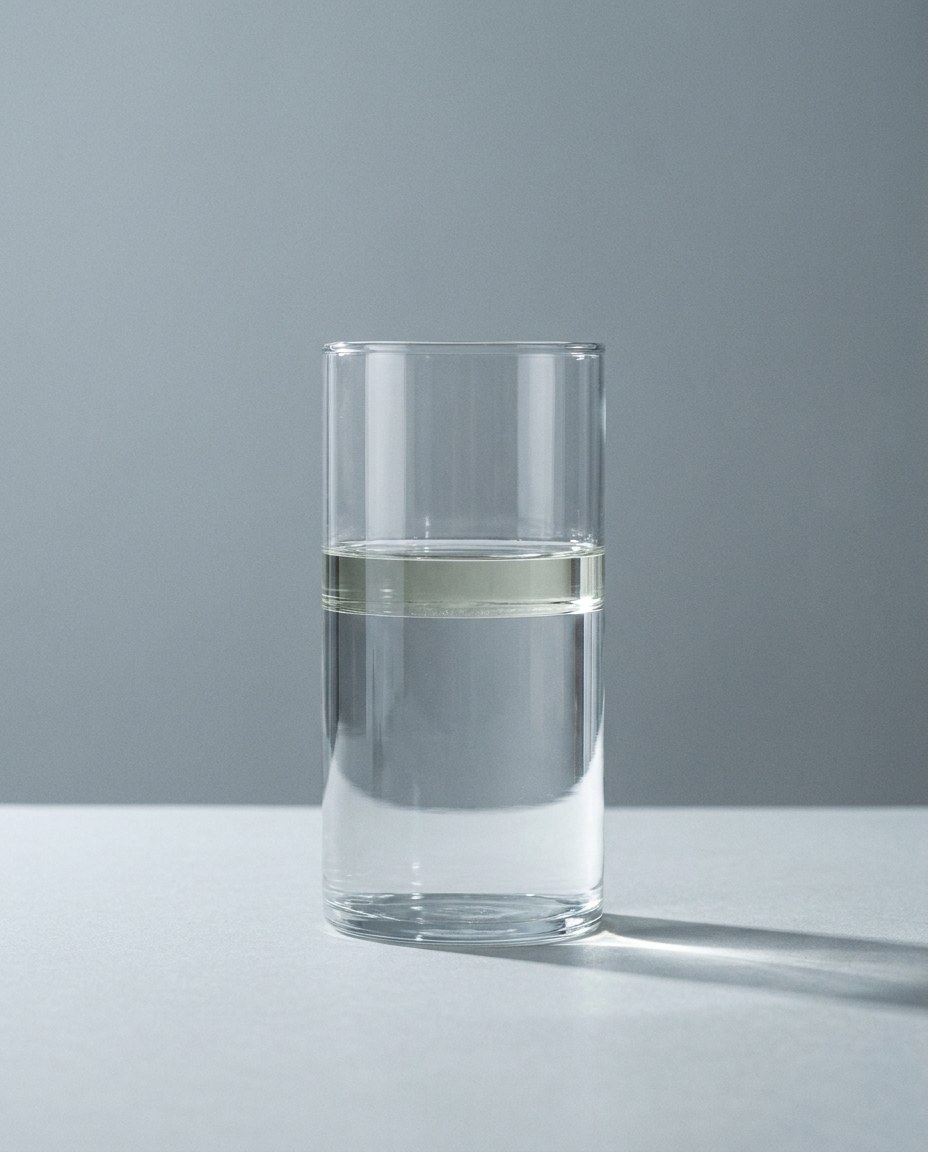
Most creams and lotions are emulsions: one of water or oil broken into very small droplets and dispersed through the other. Two substances that will not mix are held together by surfactants and by the structure of the thickened phase. It is not a mixture fixed forever, but a structure designed to stay uniform for a certain span of time and under certain conditions.
When the temperature rises, viscosity falls, and the way the droplets move and collide can change with it. Give it enough time, and the physical changes — droplets growing larger, layers beginning to separate — and the chemical ones, like the oxidation that shifts scent and color, can all move faster. The U.S. Food and Drug Administration notes the same in plainer terms: heat, light, and air can change a cosmetic's color, texture, and odor, and can weaken an emulsion or its preservative system.
A single warm moment matters less than temperature and time accumulating together. In one study, five oil-in-water emulsions were held anywhere from 0 to 50°C and watched across twelve months. Some stayed relatively stable at every temperature; others turned unstable after several months at 40 or 50°C. The outcome rested not on temperature alone but on the particular combination of emulsifier, oil, thickening structure, packaging, and how long the product was exposed.
The point of summer storage is not to make a cream cold. A stable indoor spot — out of sharp temperature swings, out of direct sun, away from the long trapped heat of a parked car — is usually closest to the conditions a product was designed for. If an already-opened jar shows an unfamiliar smell, a separation that will not settle back, and a clear change in texture all at once, that carries more information than a cream simply gone thin because it is summer. Heat rarely makes a formula betray itself in an instant. It just lets time run a little faster.
References
- U.S. FDA. Shelf Life and Expiration Dating of Cosmetics.
- Masmoudi H, et al. The evaluation of cosmetic and pharmaceutical emulsions aging process using classical techniques and a new method: FTIR. Int J Pharm. 2005.



On a hot afternoon, a single home holds several different temperatures at once. A windowsill, a bathroom shelf, the inside of a bag, a car left in the sun — each is its own small climate, and a jar of cream sitting in one of them is not having the same summer as a jar sitting in another.
Most creams and lotions are emulsions: one of water or oil broken into very small droplets and dispersed through the other. Two substances that will not mix are held together by surfactants and by the structure of the thickened phase. It is not a mixture fixed forever, but a structure designed to stay uniform for a certain span of time and under certain conditions.
When the temperature rises, viscosity falls, and the way the droplets move and collide can change with it. Give it enough time, and the physical changes — droplets growing larger, layers beginning to separate — and the chemical ones, like the oxidation that shifts scent and color, can all move faster. The U.S. Food and Drug Administration notes the same in plainer terms: heat, light, and air can change a cosmetic's color, texture, and odor, and can weaken an emulsion or its preservative system.
A single warm moment matters less than temperature and time accumulating together. In one study, five oil-in-water emulsions were held anywhere from 0 to 50°C and watched across twelve months. Some stayed relatively stable at every temperature; others turned unstable after several months at 40 or 50°C. The outcome rested not on temperature alone but on the particular combination of emulsifier, oil, thickening structure, packaging, and how long the product was exposed.
The point of summer storage is not to make a cream cold. A stable indoor spot — out of sharp temperature swings, out of direct sun, away from the long trapped heat of a parked car — is usually closest to the conditions a product was designed for. If an already-opened jar shows an unfamiliar smell, a separation that will not settle back, and a clear change in texture all at once, that carries more information than a cream simply gone thin because it is summer. Heat rarely makes a formula betray itself in an instant. It just lets time run a little faster.
References